
Our news · Public procurement & responsibility
Public procurement:
trust must be demonstrated.
Artificial intelligence, contract changes, infrastructure choices and sustainability: four perspectives on the decisions that shape a project.
October 2026
Reading time · 27 min

AI and public procurement: saving time without delegating judgement
Comparing submissions, identifying missing documents, preparing a summary: artificial intelligence can make tender processing easier. But when it is involved in evaluating bids, the issues go beyond computing performance. Equal treatment, confidentiality, traceability and responsibility must remain central to the procedure.
Imagine a call for tenders for an engineering assignment. Several firms submit their references, methodology, team qualifications and financial proposal. To speed up the review, the submissions are passed to an artificial intelligence system tasked with comparing them.
Within moments, a report appears. It is structured, reasoned and may even suggest a ranking. Yet several questions remain: were all the appendices considered? Did the tool distinguish a promise from a contractual commitment? Did it apply only the published criteria? And where was the bidders’ information processed?
This fictional example illustrates the real issue: the ability to produce an analysis guarantees neither its accuracy nor its compliance with public procurement rules.
A new tool, but obligations remain

The absence of a provision expressly mentioning artificial intelligence does not mean that its use falls outside the law.
The Intercantonal Agreement on Public Procurement (AIMP) requires, among other things, equal treatment, impartiality, transparency and confidentiality. These principles apply to the procedure, regardless of the tools used to conduct it. In Geneva, the official compilation still lists, as at 28 September 2026, the 1994 AIMP as revised in 2001: the provisions of the 2019 AIMP should therefore not automatically be applied to it. AIMP applicable in Geneva, Articles 1 and 11.
Geneva’s regulations require objective, verifiable and relevant criteria, published together with their weightings. Evaluation must follow the predefined criteria, be recorded in a comparative table and result in a decision with a brief statement of reasons. RMP, Articles 24, 43 and 45.
The issue is therefore not simply whether a tool can read a bid. It is necessary to determine whether its involvement preserves the requirements governing the review.
Automation is not necessarily AI evaluation, either. Calculating a price score using a fixed formula, locating a certificate and assessing the quality of a methodology are three different operations. They involve different uncertainties and consequences.
The risk of an evaluation being influenced without anyone noticing
A language model can produce incorrect or biased answers. The State of Geneva’s guidelines expressly stress the need to verify its outputs. Geneva guidelines on AI.
In a procurement procedure, an error may be subtle. A contractual qualification disappears from a summary. A reference is attributed to the wrong person. Experience that is merely mentioned is presented as proven.
The risk also lies in the instructions given to the tool. Asking it to favour submissions that are “convincing”, “innovative” or “particularly detailed” may steer its assessment towards qualities that do not correspond to the contract’s criteria.
Even when it suggests no score, a summary can therefore influence the evaluator: it determines what they see first, what appears important and what remains out of sight.
Having a human at the end of the process does not automatically solve this problem. If that person approves the report without consulting the original documents, their involvement may remain a formality.
Tender submissions contain information that must remain under control
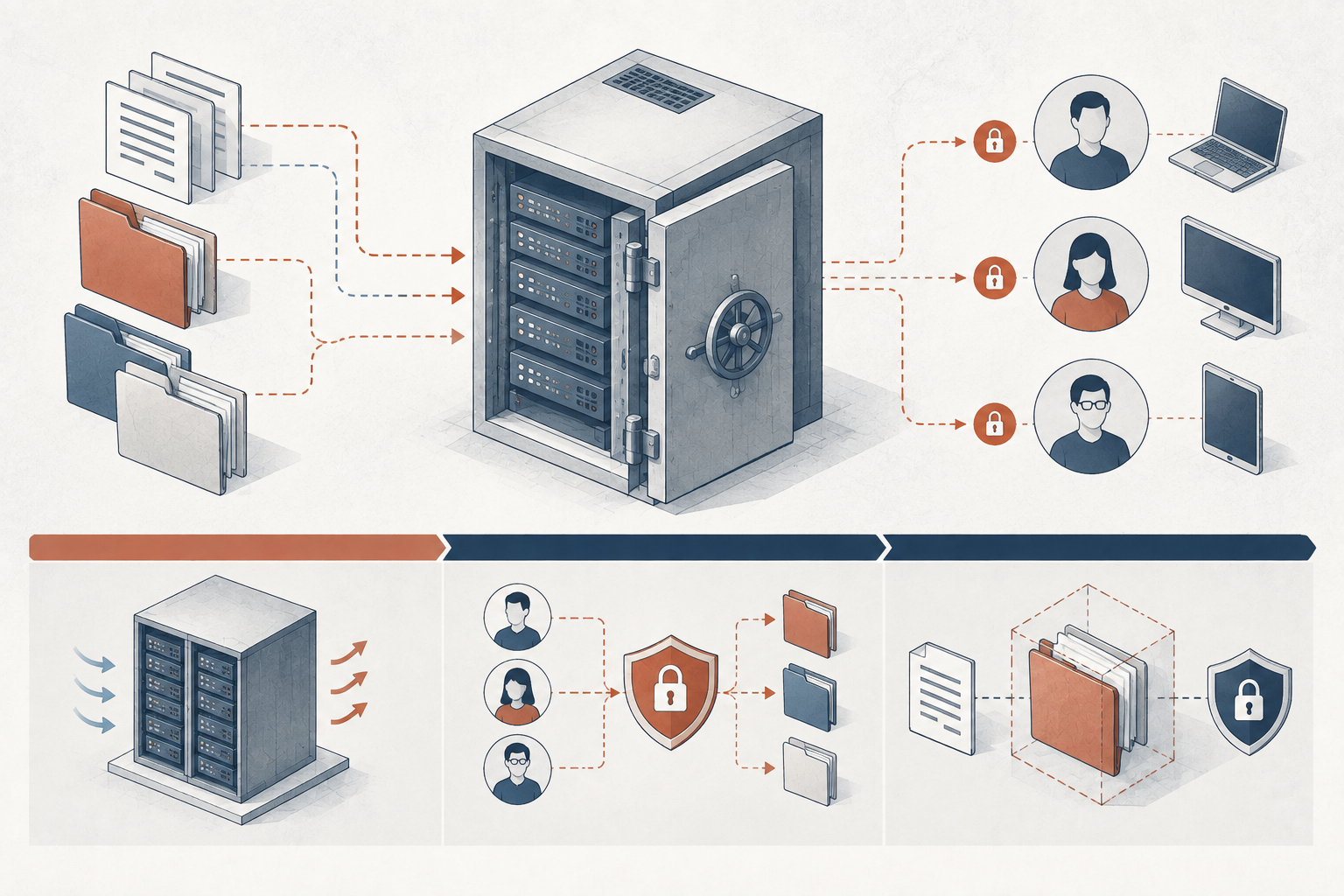
A bid is not simply a communication document. It may disclose detailed prices, working methods, client references, CVs or organisational choices.
Commercial confidentiality and data protection are two distinct, sometimes overlapping dimensions. Geneva’s RMP protects bidders’ confidential information as well as the evaluation work. RMP, Article 22.
For institutions subject to the LIPAD, personal data processing must meet, in particular, the requirements of necessity and security. The version currently in force in Geneva protects information relating to identified or identifiable natural persons and private-law legal entities. LIPAD, Articles 4 and 35–37.
Before anything is sent to an AI service, the actual processing conditions must therefore be examined: hosting, access by the provider and its subcontractors, retention periods, deletion and possible reuse of the content.
Not all services work in the same way. It would be inaccurate to claim that every document submitted is automatically used to train a model. Conversely, a private interface or professional subscription does not in itself demonstrate that the processing is suitable for confidential files.
For its staff, the State of Geneva already sets explicit restrictions on sending personal data and non-public information to the third-party services covered by its guidelines. Tools provided by the State may be subject to specific rules. This administrative framework should not be confused with a general ban on all AI. Geneva guidelines, page 5.
When a bid tries to instruct its evaluator

These issues are compounded by a vulnerability specific to applications using language models: indirect instruction injection, or prompt injection.
The mechanism involves placing instructions in content consulted by the AI in an attempt to alter its behaviour. The document is then no longer merely a source of information: it tries to become a source of instructions.
Research published as early as 2023 demonstrated this type of attack on applications incorporating language models. It establishes that external content can influence a system without direct access to its original instructions. However, it does not constitute evidence of manipulation in a Geneva public procurement procedure. Greshake and colleagues, 2023.
Applied to a tender submission, an attempt might seek to have a qualification ignored or a document presented as compliant.
The instruction might be visible or concealed in content extracted from the document.
Certain signs therefore warrant checking: a passage addressed directly to the assistant, a request to steer the result or an unexplained discrepancy between the displayed document and the text actually processed.
These signs are not sufficient to establish fraud. An invisible text layer may, for example, result from legitimate optical character recognition. The original must be retained and the anomaly examined before any conclusion is drawn.
Above all, no filter should be presented as an absolute guarantee. The UK’s National Cyber Security Centre recommends reducing both the likelihood and the consequences of these attacks, notably by limiting the actions the system can perform. NCSC, analysis of prompt injection risks.
A score must be justifiable beyond “the AI suggested it”

Traceability becomes decisive as soon as a tool influences an assessment.
From a technical perspective, an auditable method should make it possible to retrieve the documents used, the passages reviewed, the instructions given, the model version, the results obtained and the human corrections. Every material assessment should be linked to verifiable evidence.
This is a methodological recommendation, distinct from Geneva’s regulatory obligation to retain procurement documents. RMP, Article 23.
Asking the tool afterwards to justify its answer does not replace this record. An explanation generated later does not, on its own, demonstrate how the initial result was obtained.
Consider a fictional example: a bid promises intervention within ten days, subject to a specialist’s availability as stated in an appendix. If the summary retains only the deadline, it changes the perception of the commitment. The useful check is to return to the bid, not simply to ask for the summary to be reworded.
Should the use of AI be disclosed?
The texts examined do not support a claim that a standard notice is mandatory for every form of computer assistance. Nor do they support treating every use of AI as having no implications for transparency.
The tool’s actual role is decisive. Searching for documents is not equivalent to suggesting a ranking. And a generic announcement would not allow departure from the contract’s criteria and weightings. RMP, Articles 24 and 43.
Specifying in advance the assisted tasks, their limits and human responsibility is therefore one approach to good governance. It allows bidders to understand how their submissions will be handled without disclosing competitors’ confidential information.
The position of THE X CORP : administrative assistance, not delegated evaluation
At THE X CORP, we favour keeping the use of AI in tender processing as limited as possible. Our aim is not to automate professional judgement, but to examine where document assistance could save time without intervening in the assessment of bids.
We are currently deploying a language model on our internal servers. This approach aims to allow documents to be processed in a controlled environment, without sending submissions to consumer AI services or relying on external reuse conditions that are insufficiently established for this purpose.
This hosting arrangement alone does not provide an absolute guarantee of confidentiality: protection also depends on access, flows and data retention. Nor does it eliminate the risks of errors or malicious instructions.
If this assistance is brought into service, its scope will remain administrative: locating certificates, checking the presence of requested documents and flagging apparently missing items. These outputs will be items to verify, not automatic decisions on compliance or exclusion.
Our position is clear: AI will not take part in qualitative analysis, suggest scores or establish rankings.
The evaluation of skills, methodologies and technical solutions will remain human.
We also believe that any use should be disclosed in the tender documents, together with its scope. We advocate this transparency as good practice, without presenting it as an already established general legal obligation.
Progress is not about automating everything that can be automated. It is about choosing what deserves to be automated without weakening procedural safeguards.
For THE X CORP, AI can help check that a submission is complete. It must not decide the value of the bid it contains.
Legal references checked as at 28 September 2026. Analysis focused on Geneva’s framework.
Practical pointers
01Keep bid evaluation in human hands.
Our position is clear: AI will not take part in qualitative analysis, suggest scores or establish rankings.
02Control the conditions under which data is processed.
Before anything is sent to an AI service, the actual processing conditions must therefore be examined: hosting, access by the provider and its subcontractors, retention periods, deletion and possible reuse of the content.
03Check outputs against the original documents.
Asking the tool afterwards to justify its answer does not replace this record. An explanation generated later does not, on its own, demonstrate how the initial result was obtained.
After the award: how far can a public contract be changed?
An additional service, a different specialist, an extended deadline: projects rarely progress without adjustments. But in public procurement, agreement between the client and its service provider is not always enough. At what point does an adaptation transform the contract that was put out to competition?
The tendering process is complete. The firms have been evaluated, the contract has been awarded and the project is getting under way.
A few weeks later, a new request arises: extend the studies to a neighbouring building, change a technical solution or entrust additional services to the consultant already appointed.
The answer sometimes seems obvious: the consultant knows the project, has the documents and can act quickly. A contract amendment therefore appears to be the natural solution.
Yet one question must precede signature: are we still buying what was put out to competition, or are we starting to buy something else?
The award does not give a free hand

Two questions must be distinguished: what the parties may agree contractually, and what public procurement law allows them to award to the selected provider.
A signed agreement does not, on its own, settle the second question. The public TRIAS guide recalls that the contract must, in principle, respect the content of the award. Significant departures do not become permissible simply because both parties accept them.
The assessment focuses in particular on their effects on competition: could the new conditions have changed the ranking or attracted other bidders? If so, the change may go beyond a simple adjustment to the contract. TRIAS, chapter 7 — Conclusion and implementation of the contract.
This logic also protects firms that did not participate. Some might have submitted a bid had they known the scope ultimately entrusted to the successful tenderer.
Not every change requires a new procedure
It would nevertheless be excessive to treat every adjustment as a new contract.
The KBOB guide distinguishes, among other things, changes covered by a mechanism announced in the tender and incorporated in the contract, as well as negligible changes. A defined option, a variation in quantities within the planned framework or an adjustment to remuneration based on a contractual clause may therefore fall within the original award.
What matters is checking the mechanism’s actual scope and the foreseeability of its consequences. A right to make adjustments should not be treated as an unlimited ability to extend the assignment. KBOB, Guide to managing contract amendments, chapter 5.
The right question is therefore not simply: “Does the contract provide for amendments?” It is: “Does this specific change fall within what was announced and awarded?”
Value is not the only indicator

A change can be significant without substantially increasing the price.
Replacing a key person, for example, deserves particular scrutiny where their qualifications determined the bidder’s suitability. TRIAS identifies as problematic a change without an adequate replacement that calls that suitability into question. TRIAS, significant changes.
For an engineering assignment, several questions should then be asked: does the replacement have the required skills? Is their availability comparable? Does the change affect a material commitment in the bid?
Similarly, extending a deadline may change organisational constraints. Reducing the scope may remove a difficult service that affected pricing. These situations require a case-specific analysis; they do not automatically lead to the same conclusion.
The review must address the effects of the change, not just its financial percentage.
Additional services: an exception that must be justified
In Geneva, the RMP provides for direct award of additional services made necessary by unforeseeable events, linked to an original contract awarded competitively and inseparable from it without major technical or economic difficulties. In this specific case, their value must not exceed half that of the original contract. RMP, Article 15, paragraph 3, letter e.
This 50% limit is therefore not a general authorisation to increase any contract. The other conditions must also be met.
In cantons where the 2019 AIMP applies, Article 21, paragraph 2, letter e uses different wording: it refers in particular to the economic or technical difficulties, or substantial additional costs, that changing provider would entail when supplementing services already supplied. Reliance on this exception must be documented. This text must not automatically be transposed to a Geneva procedure governed by the older framework. AIMP 2019, Article 21.
The convenience of working with the existing team therefore does not remove the need to establish the legal basis for the additional order.
An example: an HVAC assignment that changes scale
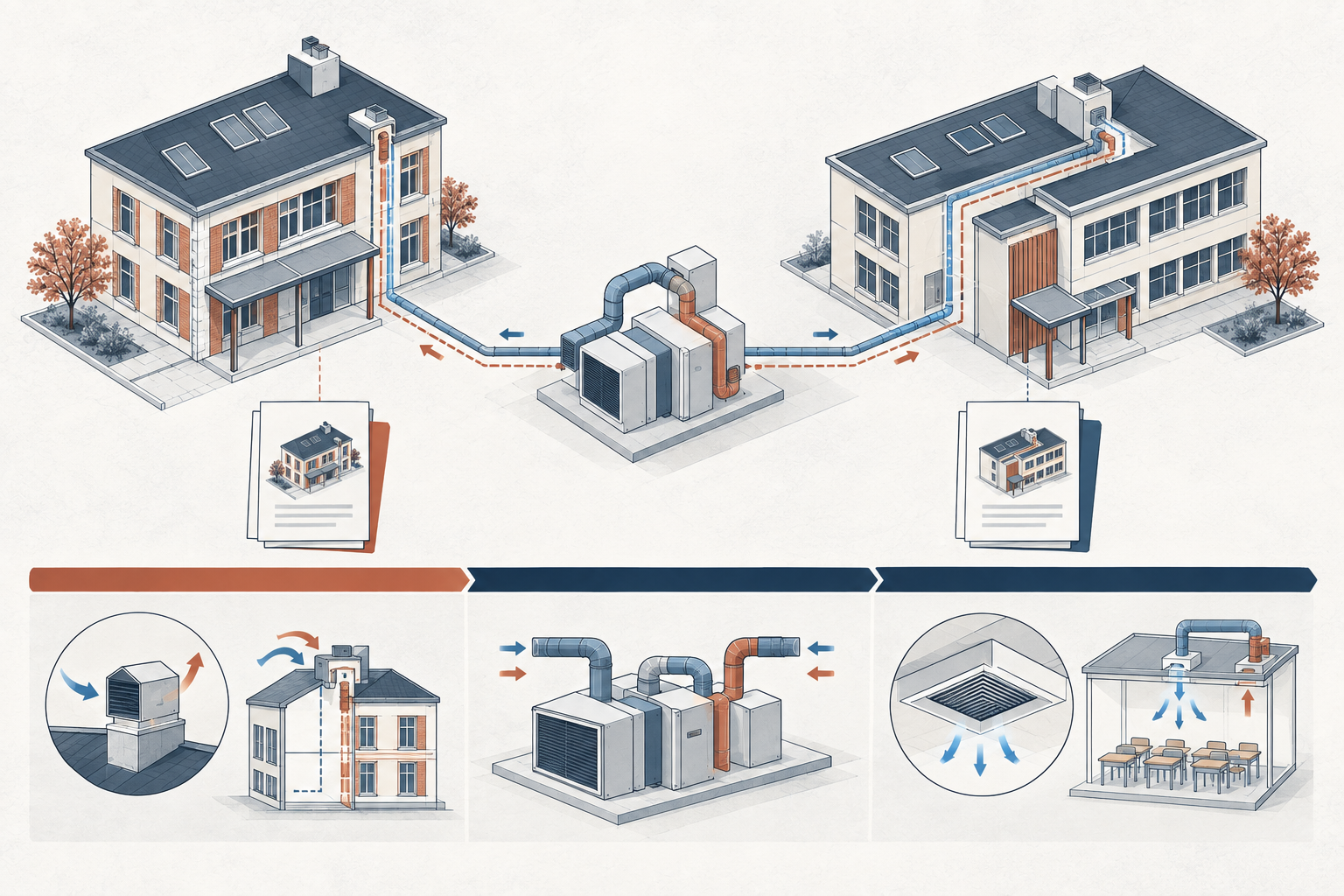
Consider a fictional case. A consultancy is awarded a CHF 240’000 heating, ventilation and air-conditioning design assignment for the renovation of a school building.
During the project, three requests arise:
• adjust quantities following a detailed survey of the installations; • replace the project manager named in the bid; • add the complete design studies for a second building for CHF 90’000.
These requests cannot be treated as three simple lines in the same amendment.
For quantities, the original scope and remuneration mechanism must be revisited. For the project manager, the tender requirements and the proposed replacement’s attributes must be examined. For the second building, it is necessary to determine whether it was included as an option or represents an extension requiring a new award.
CHF 90’000 represents 37.5% of the original assignment. Yet this calculation does not establish that the addition is permitted. Even below 50%, the amount demonstrates neither the unforeseeability of the need nor the difficulties of separation required by the Geneva exception mentioned above.
This example shows why a financial threshold can never replace the legal classification of a change.
Document before ordering

One way to support a sound decision is to bring the relevant information together in a change record:
the request and origin of the change, comparison with the original scope, technical justification, effects on costs and deadlines, alternative solutions and approval by the competent persons.
The aim is not to overburden every adjustment. It is to be able to explain, several months later, why the service was entrusted to the incumbent and on what basis.
This approach is consistent with the KBOB’s guidance: distinguish the examination of the amendment request, its contractual consequences and its compliance with public procurement law. KBOB, Guide to managing contract amendments.
The approach of THE X CORP : anticipating differences and knowing when to say no
Managing changes starts well before the first amendment is signed. It begins with analysing the need, defining the scope and preparing the procurement.
At THE X CORP, we pay particular attention to this phase: specifying the expected services, identifying interfaces between disciplines, clarifying responsibilities and checking the consistency of the documentation before inviting competition.
Our expertise across several fields allows us to consider technical and organisational constraints together to anticipate foreseeable difficulties. An inadequately defined scope or an interface without a responsible party may become a source of additional services, delays and disputes during delivery.
This does not mean claiming to eliminate every unforeseen event. It means distinguishing genuine contingencies from issues that rigorous preparation could have identified.
This requirement continues throughout the project. At THE X CORP, we are not afraid to say no when a request falls outside the contract, is inconsistent or is unreasonable.
Saying no to an out-of-scope service does not mean rejecting all change. It means refusing to treat it as a given without examining its content, justification and consequences for fees, deadlines and responsibilities. If it is relevant, its scope must be defined and the appropriate procedure followed before it is undertaken.
Similarly, a technically inconsistent request must be open to challenge, even when it seems easy to formulate. Our role is not only to support decisions: it is also to raise concerns when they weaken the project.
A project must be able to evolve. But that flexibility must not erase the conditions under which firms competed, or turn a defined assignment into an unlimited commitment.
A well-prepared procurement reduces uncertainty. Responsible support prevents those uncertainties from becoming imposed commitments.
Analysis as at 28 September 2026. The applicable law, transitional provisions and documents specific to each contract must be checked before any decision.
Practical pointers
01Examine the substance of the change, not just its value.
CHF 90’000 represents 37.5% of the original assignment. Yet this calculation does not establish that the addition is permitted. Even below 50%, the amount demonstrates neither the unforeseeability of the need nor the difficulties of separation required by the Geneva exception mentioned above.
02Prepare the procurement to anticipate deviations.
Managing changes starts well before the first amendment is signed. It begins with analysing the need, defining the scope and preparing the procurement.
03Define every out-of-scope service before undertaking it.
Saying no to an out-of-scope service does not mean rejecting all change. It means refusing to treat it as a given without examining its content, justification and consequences for fees, deadlines and responsibilities. If it is relevant, its scope must be defined and the appropriate procedure followed before it is undertaken.
Tram 15: a project’s public interest does not remove the need to justify its choices
Extending the tram towards Saint-Julien addresses a recognised mobility need. Yet its approval was annulled by the Federal Administrative Court. The case recalls a fundamental requirement: a worthwhile objective does not suffice to justify every piece of infrastructure proposed to achieve it.
On 16 July 2026, the Federal Administrative Court annulled the plan approval issued by the Federal Office of Transport for the second section of the tram 15 extension, between the Plan-les-Ouates industrial zone and the French border, via Perly.
In its response of 28 July, the Council of State emphasised that neither the principle of the tram nor its route was called into question. The first section, between Les Palettes and ZIPLO, remains in operation. The dispute primarily concerns the accompanying works for the continuation of the project, notably the bypass planned on agricultural land. Council of State, press release of 28 July 2026.
The distinction is essential: recognising a project’s usefulness does not automatically validate the chosen solution.
What the Court actually found

In judgment A-4867/2023, three difficulties structure the reasons for annulment.
The first concerns the need for the bypass, which was insufficiently demonstrated by the evidence in the file. In particular, the data do not adequately clarify the expected residual traffic.
The second concerns the examination of alternatives. The documented options remain focused on different alignments for a road south of Perly. The Court found no sufficiently substantiated explanation of why other solutions had been ruled out.
The third concerns crop rotation areas: the file does not sufficiently justify their use in terms of proportionality, particularly given the absence of planned compensation.
The Federal Administrative Court also expressed serious doubts about the Federal Office of Transport’s jurisdiction to authorise the road, but left that question open. It would therefore be inaccurate to present its lack of jurisdiction as definitively settled.
Finally, allowing the appeals does not mean that all the appellants’ arguments or requests were accepted. Federal Administrative Court judgment, considerations 6.6, 7–9 and 15, notably pages 29, 38 and 58.
Agricultural land is not simply a land reserve

Crop rotation areas are a specific resource: they comprise the most productive agricultural land and help preserve the country’s food supply capacity. Their protection rests on a federal framework requiring, in particular, a minimum area to be safeguarded and its allocation among the cantons.
Federal Office for Spatial Development, Sectoral Plan for Crop Rotation Areas.
For a designer, this constraint must be considered from the earliest stages. A land take is not simply an area available on a plan: it may involve agricultural, environmental, heritage or economic interests.
Our professional interpretation is this: a technically feasible solution may still be insufficiently justified if its consequences and alternatives are not clearly established.
Compare solutions, not merely several versions of the same idea

The case invites reflection on how studies are conducted.
In an infrastructure project, it is useful to distinguish three stages: define the need, identify families of solutions, then develop the selected solution. Moving too quickly to the third stage can lock the study into an initial choice that becomes difficult to question.
Consider a fictional example unrelated to tram 15. A building suffers from summer overheating. Three options propose chillers with different capacities. This may be a technically sound comparison without addressing the prior question: could a combination of solar shading, reduced heat gains and ventilation limit cooling demand?
Comparing three pieces of equipment is not necessarily the same as comparing three strategies.
A robust approach should therefore explain the starting assumptions, the solutions examined, the comparison criteria and the reasons for exclusions. It should also distinguish measured data, projections and intended objectives.
A new direction announced in September

On 2 September 2026, the Council of State announced that it would not appeal the Federal Administrative Court’s judgment. It explained that it preferred a new approach to further litigation that could delay the project without any guarantee of success.
Following consultation, the initially planned bypass has been abandoned. The government maintains its objective of extending the tram and announces new project governance by the end of 2026. Measures to improve the frequency of cross-border bus 80 are also planned in the meantime. Council of State, press release of 2 September 2026.
These political and operational directions must be distinguished from a definitively agreed delivery timetable.
The lesson for clients and their consultants
This case goes beyond transport alone. It raises a useful question for any project: does the documentation actually substantiate the chosen options, or merely explain how to implement them?
For design teams, several practices can strengthen that demonstration: update assumptions when circumstances change, examine alternatives early enough, clarify interfaces between disciplines and retain an understandable justification for trade-offs.
This is consistent with the approach described by THE X CORP : analyse the need, define the scope and prepare the project before fixing the solutions. Knowledge across several disciplines helps test constraints against one another and question a request when it appears inconsistent.
This perspective does not imply any involvement by THE X CORP in the tram 15 case. It expresses a methodological lesson: knowing how to question a choice early on is part of supporting the client.
A sound project is more than one that can be designed and built. It is one whose necessity can be explained, whose alternatives can be compared and whose consequences can be justified.
Article based on the Federal Administrative Court judgment of 16 July 2026 and official statements available on 28 September 2026.
Practical pointers
01Distinguish the project’s objective from the means chosen to achieve it.
In its response of 28 July, the Council of State emphasised that neither the principle of the tram nor its route was called into question. The first section, between Les Palettes and ZIPLO, remains in operation. The dispute primarily concerns the accompanying works for the continuation of the project, notably the bypass planned on agricultural land. Council of State, press release of 28 July 2026.
02Compare genuinely different families of solutions.
Consider a fictional example unrelated to tram 15. A building suffers from summer overheating. Three options propose chillers with different capacities. This may be a technically sound comparison without addressing the prior question: could a combination of solar shading, reduced heat gains and ventilation limit cooling demand?
03Identify the next steps officially announced.
Following consultation, the initially planned bypass has been abandoned. The government maintains its objective of extending the tram and announces new project governance by the end of 2026. Measures to improve the frequency of cross-border bus 80 are also planned in the meantime. Council of State, press release of 2 September 2026.
Sustainable public procurement: how can we move beyond good intentions?
A tender can set out ambitious environmental commitments without making their actual significance measurable. Sustainable purchasing requires more than adding a “sustainable development” criterion: we must define what will be compared, request evidence and verify commitments during performance.
The BKB–KBOB conference held in Biel/Bienne on 8 September 2026, devoted to tensions and synergies in sustainable public procurement, provides a starting point for this discussion. This professional event creates no new legal obligations, but puts a practical question back at the forefront: how can quality, cost control and environmental requirements be reconciled in public procurement? Official conference presentation.
The difficulty becomes apparent as soon as the tenders are read. One company highlights its environmental policy, another promises low energy consumption, and a third proposes repairable equipment. These points may be relevant, but they do not necessarily describe the same thing.
Fair comparison requires intentions to be translated into verifiable characteristics of the service or product.
The law allows us to look beyond price
In Geneva, the public procurement regulation provides for award to the most economically advantageous tender, taking value for money into account. Environmental protection is expressly listed among the possible criteria. Criteria must be relevant, objective, verifiable and announced with their weighting. RMP, Articles 24 and 43.
In cantons where AIMP 2019 applies, Article 29 specifically mentions sustainable development and life-cycle costs. Article 30 also allows technical specifications designed to conserve natural resources or protect the environment. These provisions must not automatically be applied to a procedure governed by a different legal regime. AIMP 2019, Articles 29 and 30.
There is therefore room for action. It must be used before tenders are submitted, by developing a method consistent with the subject matter of the contract.
Distinguish a minimum requirement from an assessed advantage
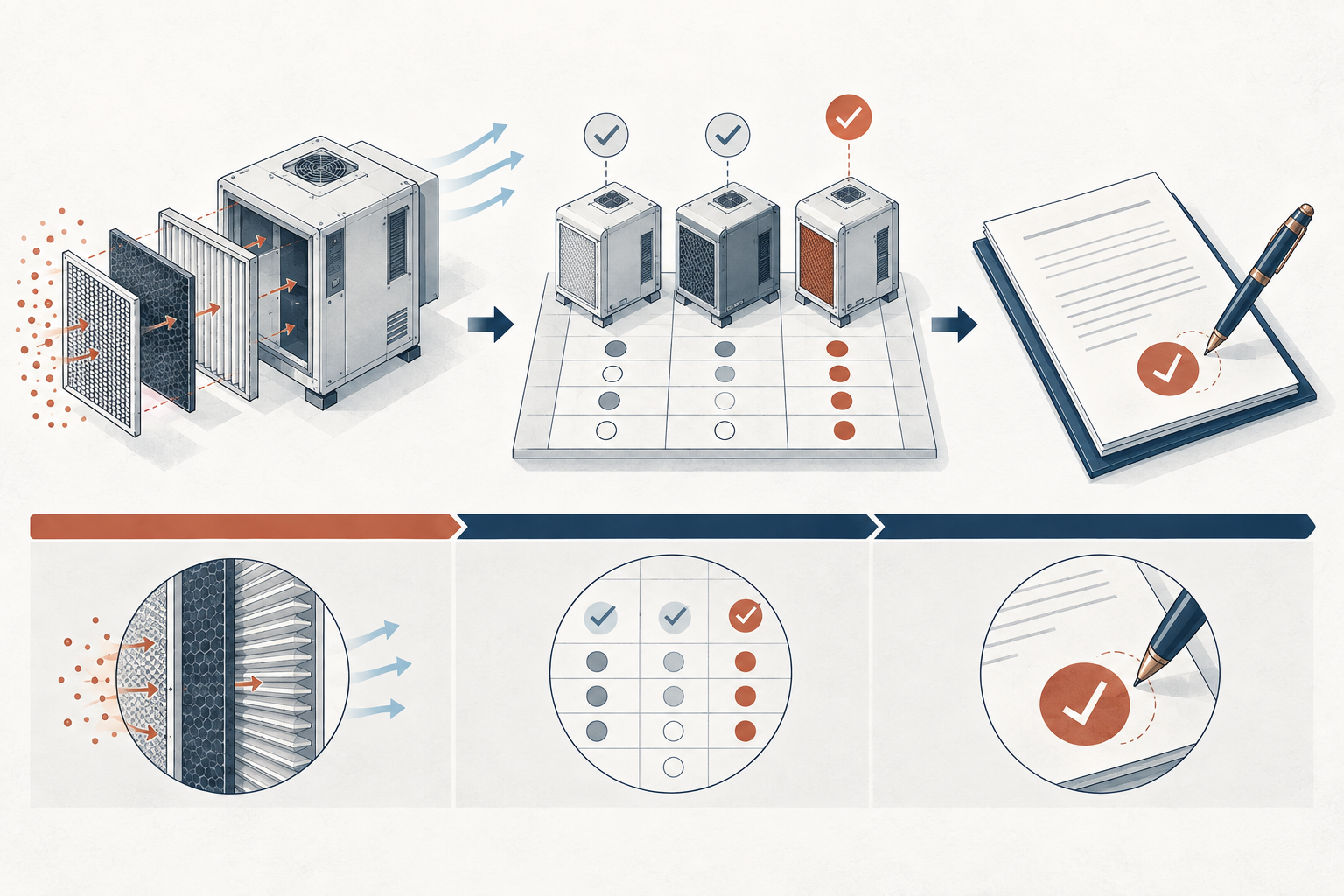
Clear drafting should separate three levels.
A minimum requirement defines what every solution must meet: maximum consumption under specified conditions, for example.
An award criterion differentiates admissible tenders: better performance may receive a better assessment under the announced method.
A contractual commitment specifies what the contractor must actually provide and how it will be checked.
Confusing these levels weakens the comparison. A characteristic presented as mandatory should not become a mere preference during assessment. Conversely, a general ambition does not allow an unannounced exclusion threshold to be inferred.
For tenderers, this distinction also clarifies where to focus their efforts: meeting a condition, demonstrating an advantage or undertaking a performance commitment.
Buying cheaper does not always mean spending less

The purchase price represents only part of an installation’s cost. Energy, maintenance, consumables, replacements and end of life can all affect the economic balance.
The TRIAS guide highlights the value of life-cycle costs in evaluation. Their inclusion nevertheless depends on how accurately they can be calculated and on the assumptions required. TRIAS, “Life-cycle costs” section.
A sound comparison therefore requires a common framework: analysis period, usage profile, energy tariffs, maintenance and replacement arrangements. If every company freely chooses its own assumptions, the results may reflect the selected scenarios more than the equipment’s performance.
Economic cost must also be distinguished from environmental impact. More cost-effective equipment is not automatically better in every ecological respect. An environmental assessment also considers manufacturing, materials, transport and end of life. The Federal Office for the Environment specifically recommends considering products’ life cycles in green public procurement. FOEN, green public procurement.
Request proportionate and comparable evidence
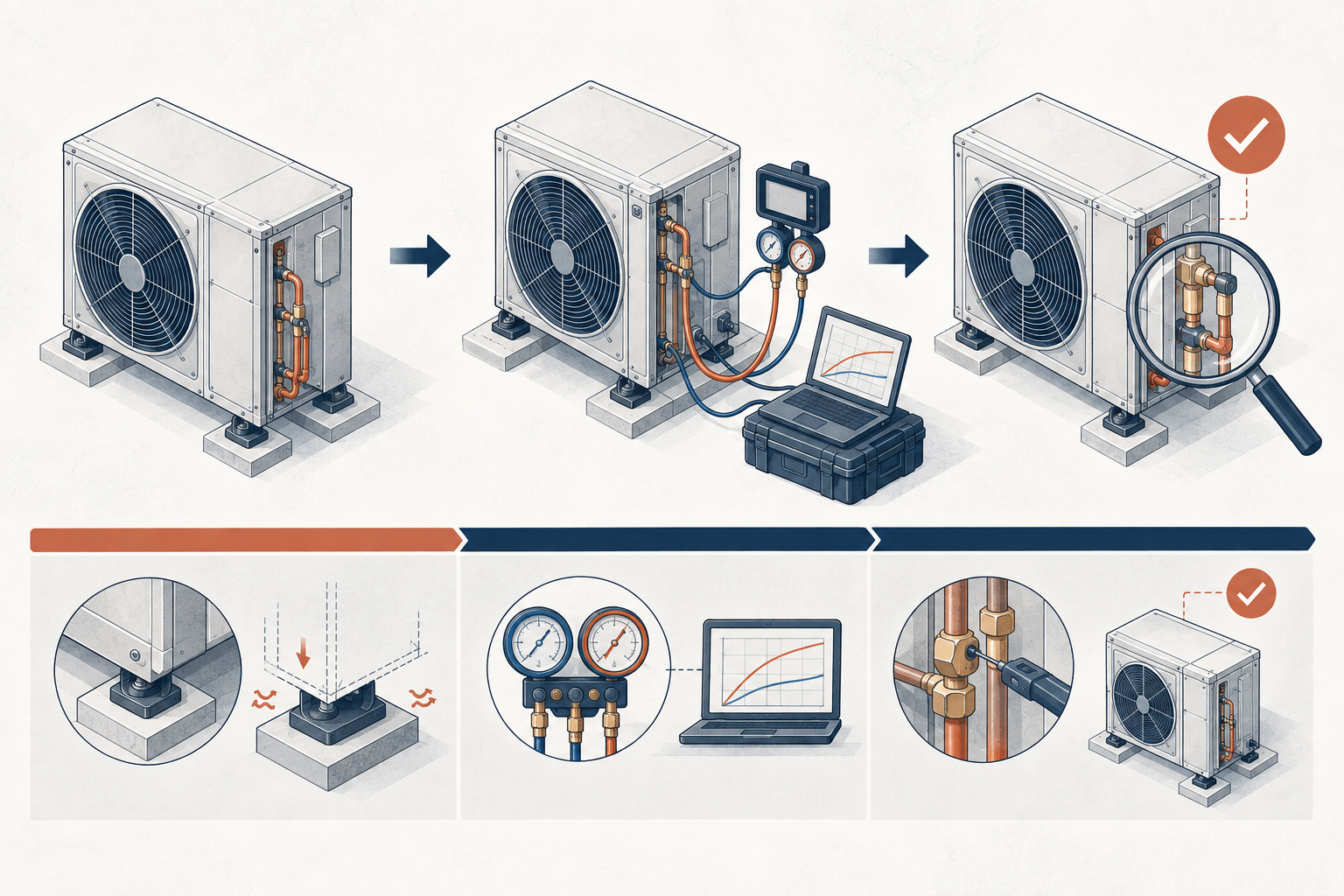
A phrase such as “environmentally friendly equipment” is not a measurement.
Depending on the contract, supporting evidence may include test results, consumption data, an environmental product declaration, information on repairability or commitments concerning spare parts.
KBOB–IPB recommendations specifically identify labels, certifications and equivalent evidence as ways to demonstrate the environmental characteristics sought. KBOB–IPB, “Sustainable procurement” factsheet.
The quality of evidence depends, however, on its scope. Certification of a company’s organisation does not, by itself, demonstrate the performance of a particular item of equipment.
For a technical comparison, it would be appropriate to specify measurement conditions, the required method, reference period and acceptable supporting evidence. Requests should remain proportionate to the issue’s importance: accumulating documents does not necessarily improve the quality of assessment.
A good score must correspond to actual performance
Awarding the contract is not the end of the process.
If a tender received credit for a material, a consumption level or repairability, those commitments must be identifiable in the contract documents and verifiable. The KBOB–IPB factsheet specifically recommends checking compliance with criteria through supporting evidence or on-site inspections. KBOB–IPB, client responsibilities.
For a technical installation, a monitoring method could include checking the models delivered, acceptance testing, adjustments and a performance observation period.
Operating conditions must then be taken into account. Measured consumption also depends on schedules, occupancy and settings. An overrun does not, without analysis, automatically establish responsibility on the part of the equipment or its supplier.
Example: two installations, two ways of reading the price
Consider two fictional solutions meeting the same functional need. The study assumes a twenty-year service life and identical operating conditions.
| Comparison item | Solution A | Solution B |
|---|---|---|
| Acquisition and installation | CHF 100’000 | CHF 125’000 |
| Energy per year | CHF 12’000 | CHF 8’000 |
| Maintenance per year | CHF 2’000 | CHF 2’000 |
| Acquisition + energy + maintenance over twenty years | CHF 380’000 | CHF 325’000 |
Solution B costs CHF 25,000 more to buy. Under these assumptions, however, its cumulative expenditure over twenty years is CHF 55,000 lower.
This calculation is deliberately simplified: it includes neither financial discounting, changes in tariffs, major replacement, residual value nor end-of-life costs. Nor does it constitute an environmental assessment.
In a real procurement procedure, these parameters should be examined and the appropriate method defined before evaluation.
Solution B would not automatically win the contract: the outcome would depend on all the announced criteria.
The example nevertheless shows why the initial price is not always enough to identify the most economical solution over time.
From ambition to verification

Tools are available to integrate sustainability more effectively. KBOB provides recommendations for procurement in construction; its July 2026 publication on reinforcing steel illustrates how environmental objectives can be translated into tender requirements. KBOB, sustainable construction.
The challenge is to connect four steps: define the need, compare on a common basis, incorporate commitments into the contract and verify their fulfilment.
Sustainable public procurement is measured not by the number of environmental promises in tenders, but by the ability to measure them, compare them and enforce them.
Article based on sources available on 28 September 2026.
Practical pointers
01Compare costs over the service life.
The purchase price represents only part of an installation’s cost. Energy, maintenance, consumables, replacements and end of life can all affect the economic balance.
02Request evidence suited to the performance being assessed.
The quality of evidence depends, however, on its scope. Certification of a company’s organisation does not, by itself, demonstrate the performance of a particular item of equipment.
03Monitor commitments during performance.
If a tender received credit for a material, a consumption level or repairability, those commitments must be identifiable in the contract documents and verifiable. The KBOB–IPB factsheet specifically recommends checking compliance with criteria through supporting evidence or on-site inspections. KBOB–IPB, client responsibilities.